Maharaja's Joker Andar Bahar
A marble palace, a long pool scattered with rose petals and a green parrot in a jester's turban. One card goes in the middle, and the question is simple: which side gets its twin first?
Updated 13 October 2026
In-depth review: Maharaja's Joker review: Andar Bahar at the palace pool
The short version
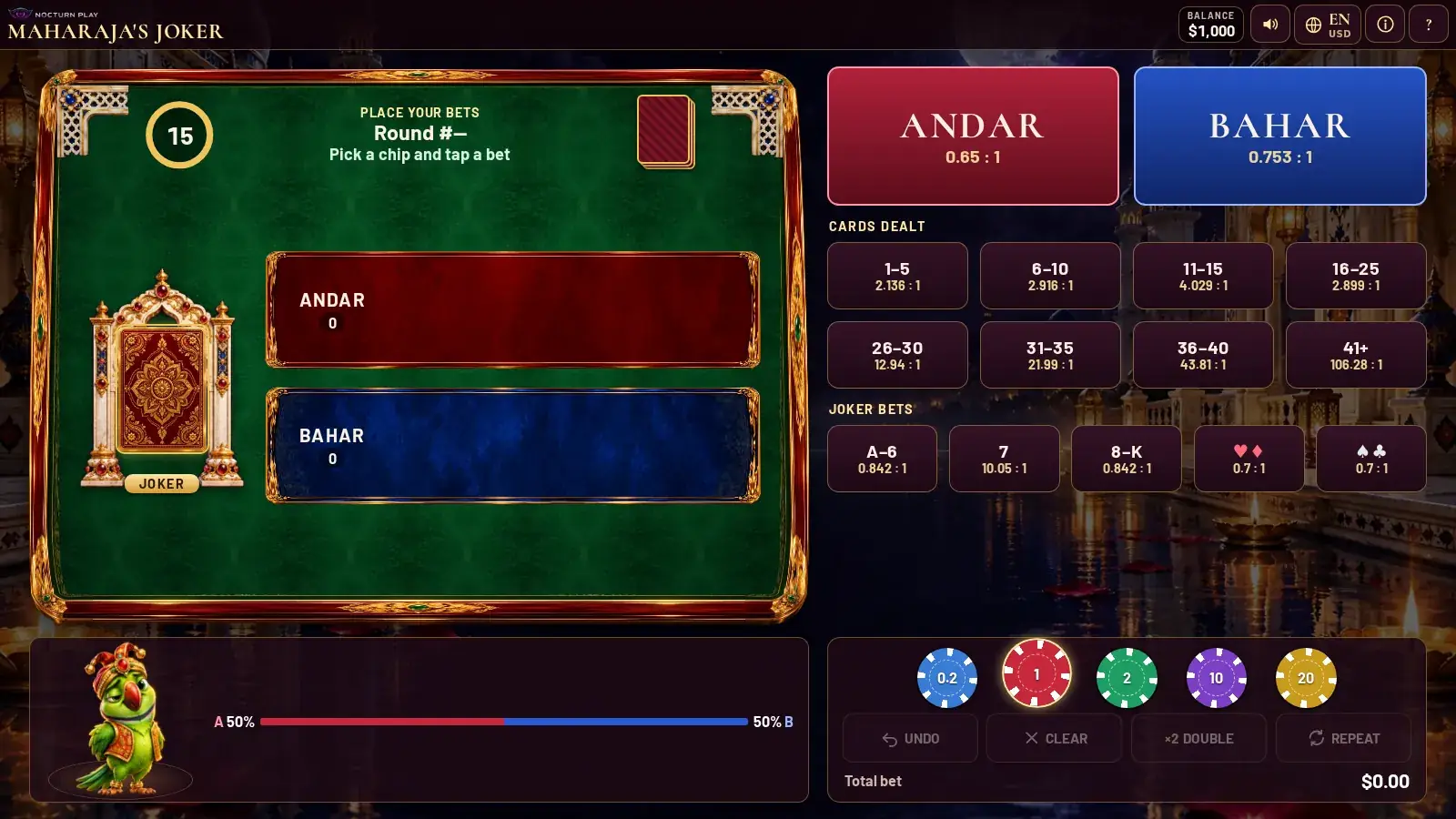
Maharaja's Joker is Nocturn Play's take on Andar Bahar, the card game played all over India. A Joker card is turned face up, then cards are dealt one at a time to two lanes, Andar and Bahar, until one of them receives a card of the same rank. You bet on the side that will get it, and you can add side bets on the length of the deal and on the Joker card itself.
A palace by night
The table sits at the end of a long reflecting pool between two white marble palaces, with blue domes, lit lanterns, diyas floating on the water and a full moon overhead. Your host is a bright green parrot wearing a jewelled turban with jester bells and an embroidered waistcoat. He watches the deal with a raised eyebrow and takes a bow when you win. Wins open a peacock's tail behind a gold plaque, and the bigger ones bring a fall of rose petals.
How a round works
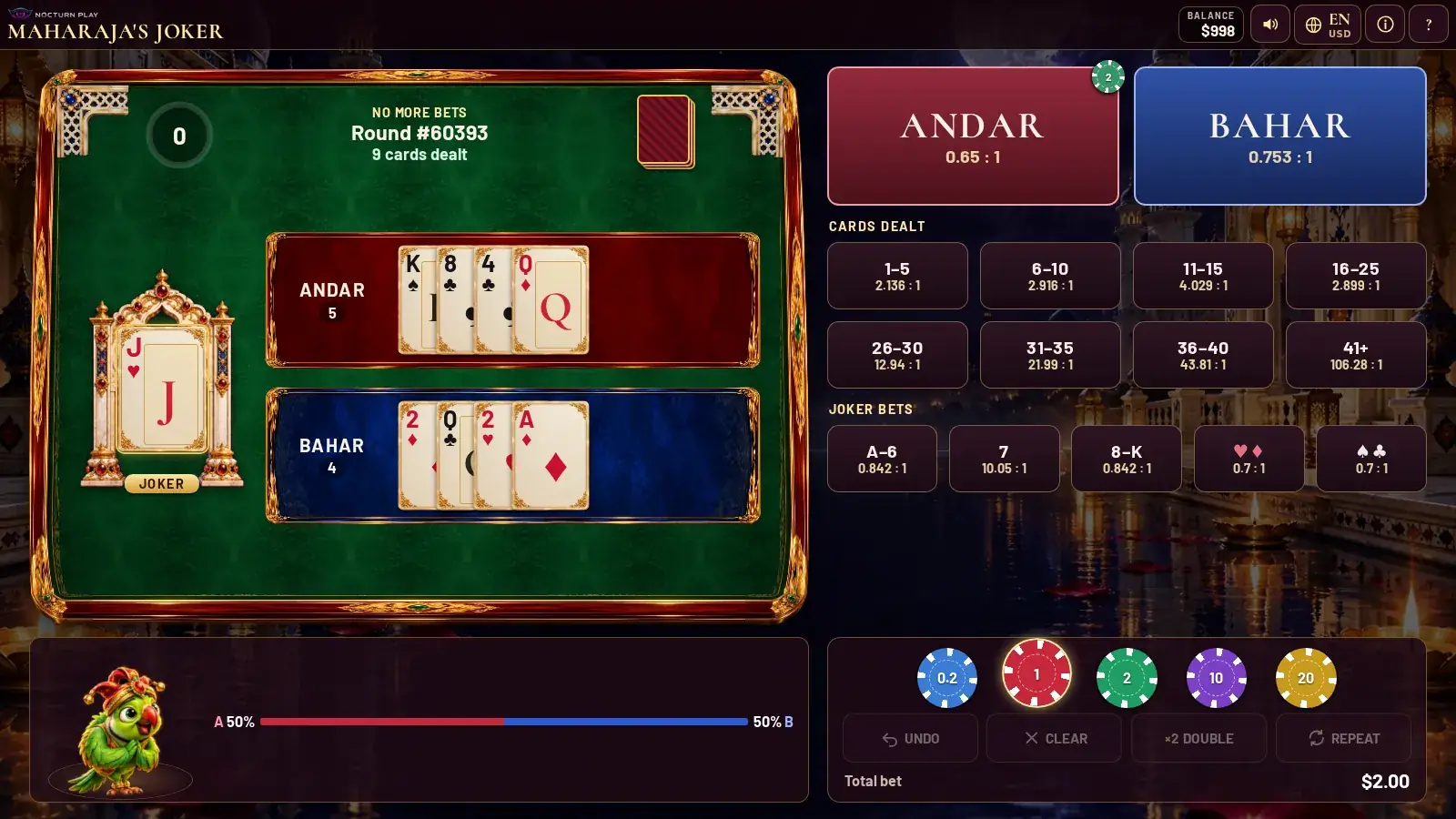
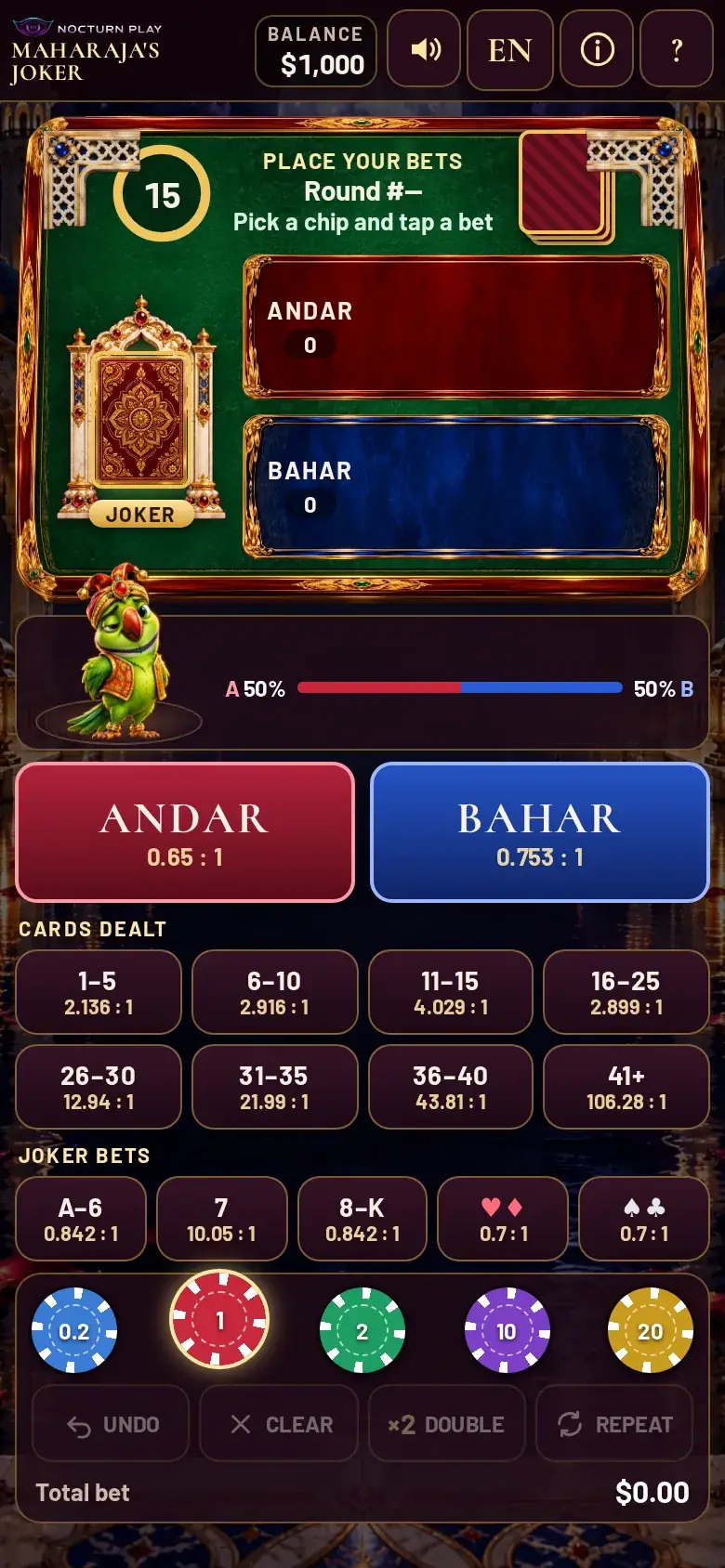
Each round opens with a betting timer, 15 seconds by default. Pick a chip and tap the spots you want. When the timer runs out, bets close and the Joker lands in the middle. Then the dealing starts: Andar first, then Bahar, then Andar again, one card at a time from a single shuffled 52-card deck. The first card that matches the Joker's rank ends the round, and the lane it lands in wins.
Andar is always dealt first, so it wins slightly more often than Bahar and pays slightly less. The exact payouts for every spot are listed in the in-game paytable, shown as winnings per 1 staked with your stake returned on top.
The side bets
Cards dealt. Eight ranges cover how long the round lasts, counting every card given to either lane, the matching one included: 1–5, 6–10, 11–15, 16–25, 26–30, 31–35, 36–40 and 41 or more. Past 25 cards, rounds get rare very quickly, so those last four ranges pay far more, with 41+ at the top of the table. The 16–25 range spans ten counts, which is why it pays less than the narrower 11–15.
Joker bets. These are settled the moment the Joker is turned: A to 6, exactly 7, or 8 to K, and red or black. The 7 is a single rank against six on each side, which is why it pays far more than the two ranges around it.
All of these spots can be combined in the same round. Undo removes your last chip, Clear empties the table, Double doubles every bet and Repeat restores the previous round's layout.
Reading the table
The bead road along the side records the latest results, red for Andar and blue for Bahar, each bead marked with the number of cards the round took. It is there for the pleasure of watching streaks form; every round uses a freshly shuffled deck, so past beads have no say in the next deal.
The layout was designed for phones held upright first. If you enjoy Indian card tables, Royal Trail brings Teen Patti 20-20 to the same studio, and the full list is on the games page.
Frequently asked questions
How do you win at Maharaja's Joker?
Bet on Andar or Bahar. Cards are dealt alternately to both lanes, Andar first, and the lane that receives the first card matching the Joker's rank wins.
Why does Bahar pay more than Andar?
Andar receives the first card, which gives it a small head start. Bahar wins a little less often, so its payout is a little higher.
What are the Joker bets?
Bets on the Joker card itself: A to 6, exactly 7, 8 to K, red or black. They are decided as soon as the Joker is shown.
How long is the betting window?
15 seconds by default. When the timer ends, bets close and the deal begins.